
Simulator for the Operator of a Claas Lexion 8900 Terra Trac Combine Harvester
About the simulator
The combine operator simulator is designed for use in vocational training institutions that prepare combine operators using simulators in accordance with the "State Standard of Vocational Education" DSTPO 8331.A.01.50 - 2016.
The training simulator consists of a model of the main control elements of the workstation of a tractor driver-operator in agricultural production and computer equipment, with installed licensed special software.
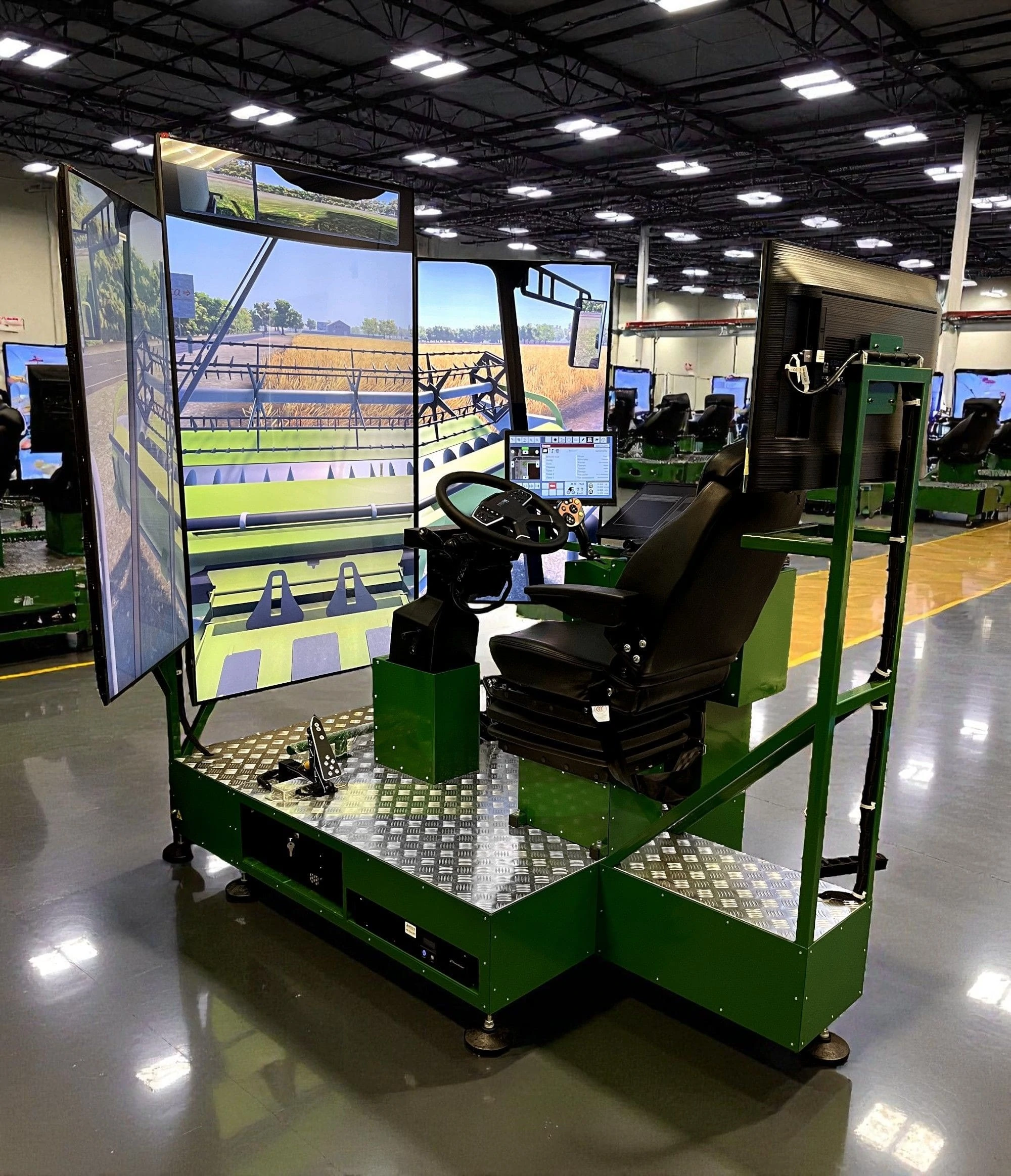
Computerized mechanical mock-up of the combine harvester operator workstation consists of:
- Front Platform
- Central Platform
- Rear Platform
- Vibration Isolation Supports
- Operator Seat
- Control Equipment Mounting Bracket
- Steering Wheel
- Brake Pedal Assembly
- Clutch Pedal
- System Unit
- Uninterruptible Power Supply (UPS)
- Multifunction Control Lever
- Touchscreen Control Panel Monitor
- Touchscreen Control Terminal Monitor
- Front Landscape Display
- Side Landscape Displays
- Rear-View Display


Specialized licensed software ‘Combine operator training program’
The software performs three-dimensional modeling and simulation of the environment (a location with a base, fields, roads, buildings, and variable vegetation on the fields), generates visualization images from the operator’s cab of the combine harvester, and implements mathematical models of the combine’s operation depending on working modes and external factors, with status displayed on control instruments and control panels.
The Training Program Includes Preparatory Exercises Designed to Develop Various Skills Depending on the Training Topic:
Road Transportation Operations
Harvesting Operations (Intermediate Level)
- Road transportation operations. Intersection crossing. Driving through urban areas. Uphill and downhill movement.
- Road transportation operations in traffic conditions involving vehicles and agricultural machinery.
- Road transportation operations in traffic conditions involving vehicles and agricultural machinery while towing a header.
- Selection and configuration of combine harvester operating modes for harvesting various crops
- Harvesting operations, field maneuvering, turning, U-turns, and obstacle avoidance, including power line poles and earth mounds
- Monitoring grain tank fill levels, positioning near a truck (tractor), and unloading grain from the tank into a trailer or truck bed.
Operator Training in Combine Harvester Control Systems
- Boarding Procedures. Familiarization with Control Interfaces and Signaling Systems (Cabin Equipment, Warning Indicators, Their Functions, and Operating Procedures);
- Engine Start and Warm-Up. Monitoring Instrument Readings. Moving Off from Standstill. Straight-Line Driving at Low Speed. Smooth Braking and Stopping of the Combine Harvester. Engine Shutdown. Activation and Deactivation of Working Systems;
- Combine Harvester Driving in Straight-Line Movement and Turning Maneuvers. General Maneuvering;
- Reverse Driving Operations;
- Reverse Entry into a Hangar Through the Gate and Exit Maneuvers;
- Maneuvering with Attached Header;
- Maneuvering While Towing a Header.
Solutions for Agricultural Management
- Configuration and Adjustment of Combine Harvester Settings, Including Synchronization with Other Vehicles;
- Synchronization and Coordination of the Combine Harvester and Support Vehicle (Tractor) During On-the-Move Crop Unloading Without Interrupting Harvesting Operations. Adjustment of Combine Settings According to Field Terrain, Slopes, and Elevation Changes.
Harvesting Process Optimization
- Optimization of Combine Harvester Settings Based on Crop Loss Sensor Readings and Grain Cleanliness Indicators During Harvesting Operations;
- Ability to Operate the Combine Harvester Using GPS-Based Parallel Guidance and Autopilot Systems.

Attachment of Front and Rear Implements, Harvesting Operations (Entry Level)
- Attachment of Headers for Grain and Corn Harvesting Operations;
- Selection and Configuration of Combine Harvester Operating Modes for Harvesting Various Crops;
- Harvesting Operations Using a Grain Header, Including Field Maneuvering, Turning, U-Turns, and Monitoring Grain Tank Fill Levels;
- Detachment of the Header and Attachment for Towing Operations.
Combine Harvester Adjustment and Configuration, Harvesting Operations (Advanced Level)
- Selection and Configuration of Combine Harvester Operating Modes via the Control Panel for Harvesting Operations Under Various Conditions;
- Adjustment of Combine Harvester Settings According to Field Terrain, Slopes, and Elevation Changes;
- Harvesting Operations on Fields with Slopes and Elevation Changes;
- Adjustment of Combine Harvester Settings According to Crop Moisture Levels;
- Harvesting Operations on Fields with Slopes and Elevation Changes, Including Field Maneuvering, Turning, U-Turns, Obstacle Avoidance (Power Line Poles, Earth Mounds), Dynamic Adjustment of Combine Operating Modes, and Header Calibration According to Field Conditions and Crop Moisture Levels.


